
Link Building Japan Blog
What Drives Cost in Our Japan Programmes
Japanese link building pricing varies widely. Here is what drives cost in our programmes—and what clients should expect to invest for results that matter.
Yuki Tanaka
Head of Editorial & Native Content · Tokyo
Pricing for Japanese link building is opaque. Vendors quote per link without explaining what determines the price, clients compare quotes that cover fundamentally different scopes, and unrealistic expectations form when someone promises national media placements at directory listing prices. At Link Building Japan, we explain what drives cost in the Japanese market so clients can evaluate proposals—including ours—with clearer criteria and protect both budget and backlink profile quality.
Our pricing follows publisher tier, Japanese-language content quality, and editorial process—not a universal per-link menu. Quotes that ignore those variables are not comparable to ours.
Publisher tier is our primary cost driver
A link from a national business daily costs substantially more than a link from a regional online publication. The difference reflects genuine editorial gatekeeping, the publisher's own audience value, and the review process required before publication. National media titles—many headquartered in Tokyo—employ editorial teams that evaluate submissions critically. Regional and specialist publications have lighter processes but still maintain standards that exclude purely promotional content.
We do not publish a rate card because publisher pricing changes and because scope determines cost more than a per-link menu. We provide quotes after understanding objectives, target publisher tier, and content requirements. Any vendor offering fixed per-link pricing across all publisher tiers is either misrepresenting what they deliver or working with publishers that do not meet the editorial standards we require.
What clients are actually paying us for
- Access to Japanese publishers with genuine editorial review
- Placement on pages that can pass meaningful .jp backlinks
- Relationship management and negotiation with media desks
- Monitoring for live links, indexation, and attrition
Content production is a material part of our cost
Japanese-language content written to editorial standards requires native or near-native writers who understand both the subject matter and the publication's tone. Machine translation or non-native writing produces content that publishers reject and that readers identify immediately as foreign. In our editorial placements, content production typically represents thirty to fifty percent of total placement cost.
Contextual links involve less content production because the existing article provides the context. The cost is primarily publisher negotiation and editorial review of the proposed update. This is one reason contextual links cost less per placement in our mix, though total programme cost depends on how many placements are needed for Japanese SEO impact.
Why we do not cut corners on content
Rejected drafts, resubmissions, and wasted outreach cycles erase the apparent savings of low-cost writing. Publishers remember poor submissions. A single weak draft can close a door that would have supported multiple future placements on the same title—so we protect those relationships.
When you compare us to other vendors, ask whether content production, revision rounds, and alternative-publisher retries are included. A low headline fee that excludes rewrites is not a lower total cost of ownership.
Timeline, exclusivity, and costs we surface early
Rush timelines cost more because they require prioritising a submission over other clients and publishers' existing editorial schedules. Exclusivity, where a publisher agrees not to feature competing brands within a defined period or topic area, carries a premium because it limits the publisher's revenue from other clients. Standard timelines aligned with publisher editorial calendars produce better pricing and often better placements—and that is our default recommendation.
Costs we make sure clients do not overlook
- Translation of existing assets for publisher fact-checking
- Legal review of claims made in Japanese content
- Client time for approval cycles across time zones
- Revision rounds when publishers request changes
- Sunk cost when a submission is rejected after production
Failed placements also carry cost. A rejected editorial submission after content production represents sunk cost even if we retry on another publisher. We structure agreements to clarify what happens on rejection: whether revision and resubmission is included, whether alternative publishers are pursued at no additional content cost, and how timeline adjusts.
International clients should clarify whether quotes are in JPY or USD, how publisher cost fluctuations are handled, and what wire or conversion fees apply. We put currency terms in the agreement so there are no surprises.
What low-cost offers typically deliver—and why we refuse them
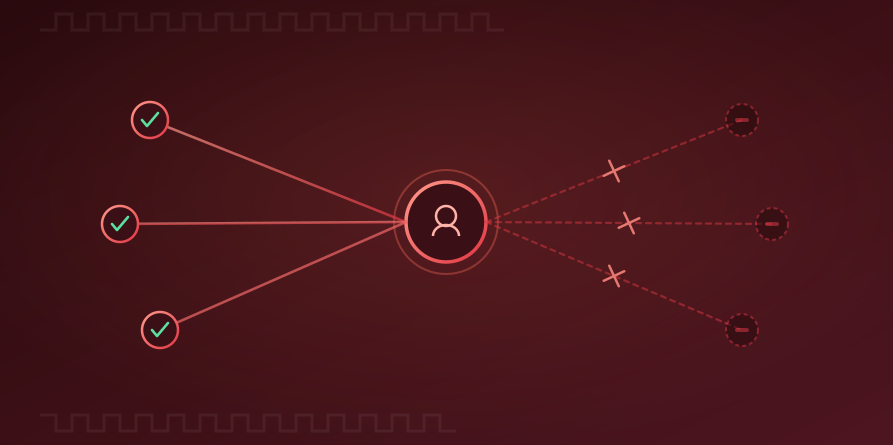
Proposals significantly below market rate for stated publisher tiers usually indicate one of several realities: the vendor works with publishers that sell links without genuine editorial review, the content will be machine-translated or written by non-native speakers, the stated publisher is misrepresented (a subdomain or contributor page rather than editorial content), or additional fees appear after initial commitment.
We advise clients to ask any vendor—including us—for publisher assessment documentation, sample content from previous placements, and clarity on whether the link will appear in editorial body copy or in a designated sponsored section. Price alone is not a reliable quality indicator, but price far below market norms is a reliable warning sign for Japanese link building programmes.
| Quote signal | What it often means |
|---|---|
| One price for all .jp sites | Publisher quality is not differentiated |
| No content line item | Machine translation or thin templates |
| Guaranteed national media | Overpromise or non-editorial inventory |
| Vague publisher list | Scope will shift after commitment |
Realistic budget ranges for programmes we recommend
A programme that produces measurable ranking movement in competitive Japanese queries typically requires investment across multiple placements over several months. Single placements produce single links, which rarely shift competitive rankings on their own. A quarterly programme combining editorial placements and contextual links across varied publisher tiers creates the profile diversity and velocity patterns that algorithms respond to—and that is how we usually structure work.
Project budgets for defined campaigns start where a single national media editorial placement would cost and scale based on publisher tier mix and placement count. Monthly retainers suit ongoing programmes where consistent acquisition over six to twelve months produces compounding results.
How we think about retainer versus project pricing
Monthly retainers spread cost and produce consistent acquisition velocity that algorithms recognise as natural. Project pricing suits defined campaigns with clear end dates but may create burst patterns if multiple placements complete simultaneously. Retainers often appear more expensive monthly but include monitoring, relationship maintenance, and flexibility to shift publisher targets—which is why many of our long-running clients choose them.
How we evaluate return on investment
We measure Japanese link building ROI against Japanese organic traffic and ranking movement, not global domain authority metrics. A programme that increases domain authority without moving Japanese rankings has failed its objective regardless of what aggregate metrics show. Cost per ranking improvement and cost per organic conversion provide more useful ROI frameworks than cost per link—and those are the frames we report against.
We track baselines for target Japanese queries before programmes begin. We include upstream signals such as brand search volume and AI citations where relevant, especially when editorial placements are part of the mix.
How we ask clients to compare proposals fairly
When comparing proposals, normalise for publisher tier, content production inclusion, revision policy, reporting frequency, and whether the quote covers outreach to multiple publishers or a single guaranteed title. A quote for one national media placement with full content production is not comparable to a quote for five unspecified .jp backlinks without content details.
- Ask for specific publisher targets or clear tier ranges
- Ask for sample content from previous Japanese placements
- Ask what happens if a publisher rejects the submission
- Ask how the vendor assesses backlink profile risk
Prepare a brief covering target queries, current Japanese backlink profile status, competitive landscape, timeline, and budget range. We quote from that information—not from a generic menu. The goal is a programme priced honestly for publishers and content quality that will move Japanese search visibility. That is how we price Link Building Japan work.